The trust layer of the internet, applied to social media
uptrusting.com is a social network where your feed follows the people you trust, topic by topic, and your questions find the friend of a friend who can help. We built it for civilizational wellbeing: people who can disagree, understand each other, and show up for each other.


Same votes, different feed
Every vote on UpTrust is evidence of trust between two people. Votes from people you trust count more for you, and so do votes from the people they trust. The same post can rank first for you and far lower for your neighbor, and both rankings are right.
Your view, and your people's
Every view starts from you. Trust goes from one person to another, on a topic, and moves as people vote on and vouch for each other. Switch to a named lens, like one of your groups or a community found in the voting, to see how those people rank posts. On a group page you can also see how the group trusts its members.
Topic by topic
You can trust a friend on cooking and not on economics. Your feed keeps those apart, so each subject reaches you through the people you rely on for it.
Yours to shape
You decide who you trust, and you can see what shaped your feed. The more people you trust, the more your feed reflects them.
Built for civilizational wellbeing
Engagement ranking pulls everyone toward the loudest thing on the screen. Outrage wins because it keeps people scrolling, and people end up tied to the feed instead of to each other. A society that can't talk through its disagreements can't solve much else.
How well people reason together shapes what a civilization can do, and social media now shapes how people reason together. So we measure UpTrust by one thing: whether people understand each other better.
Bridges get seen
The engine scores bridges: posts that earn trust from both sides of a disagreement. They get their own page and a tab on every topic, so the posts that bring people together are easy to find.
Every side, named
Open Questions takes on hard, contested questions and names each perspective, so you can see what the other side believes.
Hard to game
Once you trust a few people, your ranking starts from them, so bots and brigades reach you only through people you trust. A thousand fake votes count for little when nobody you trust cast them.
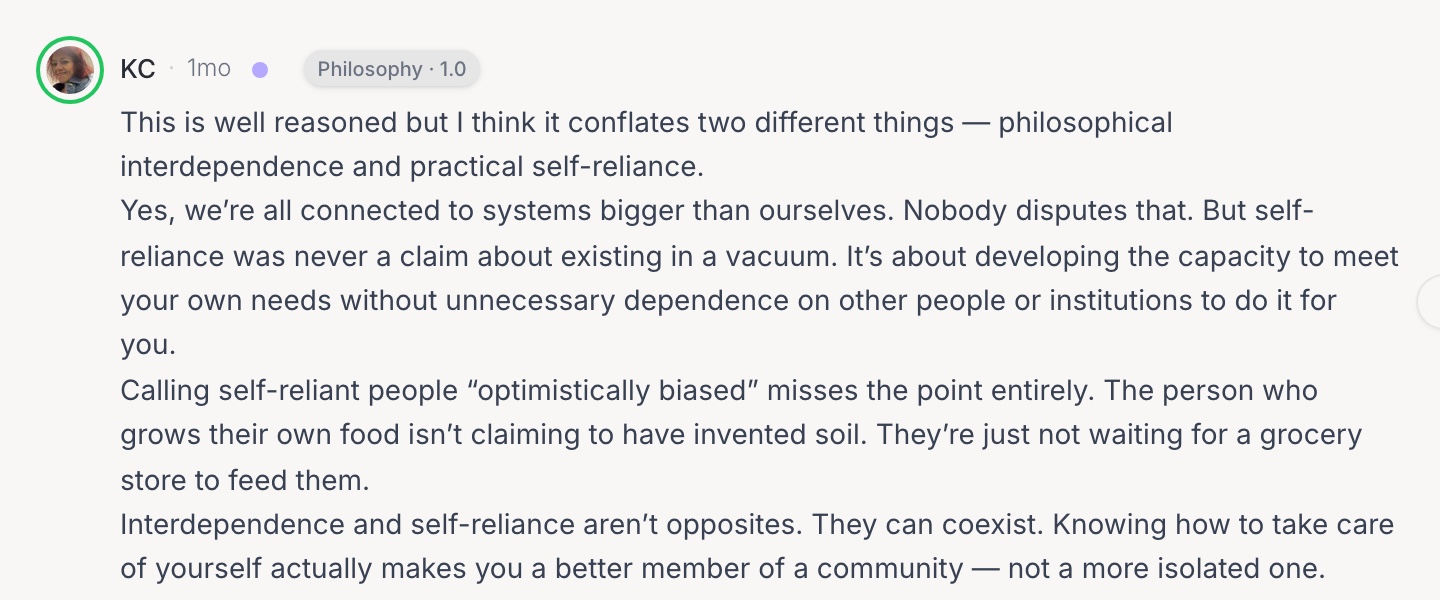
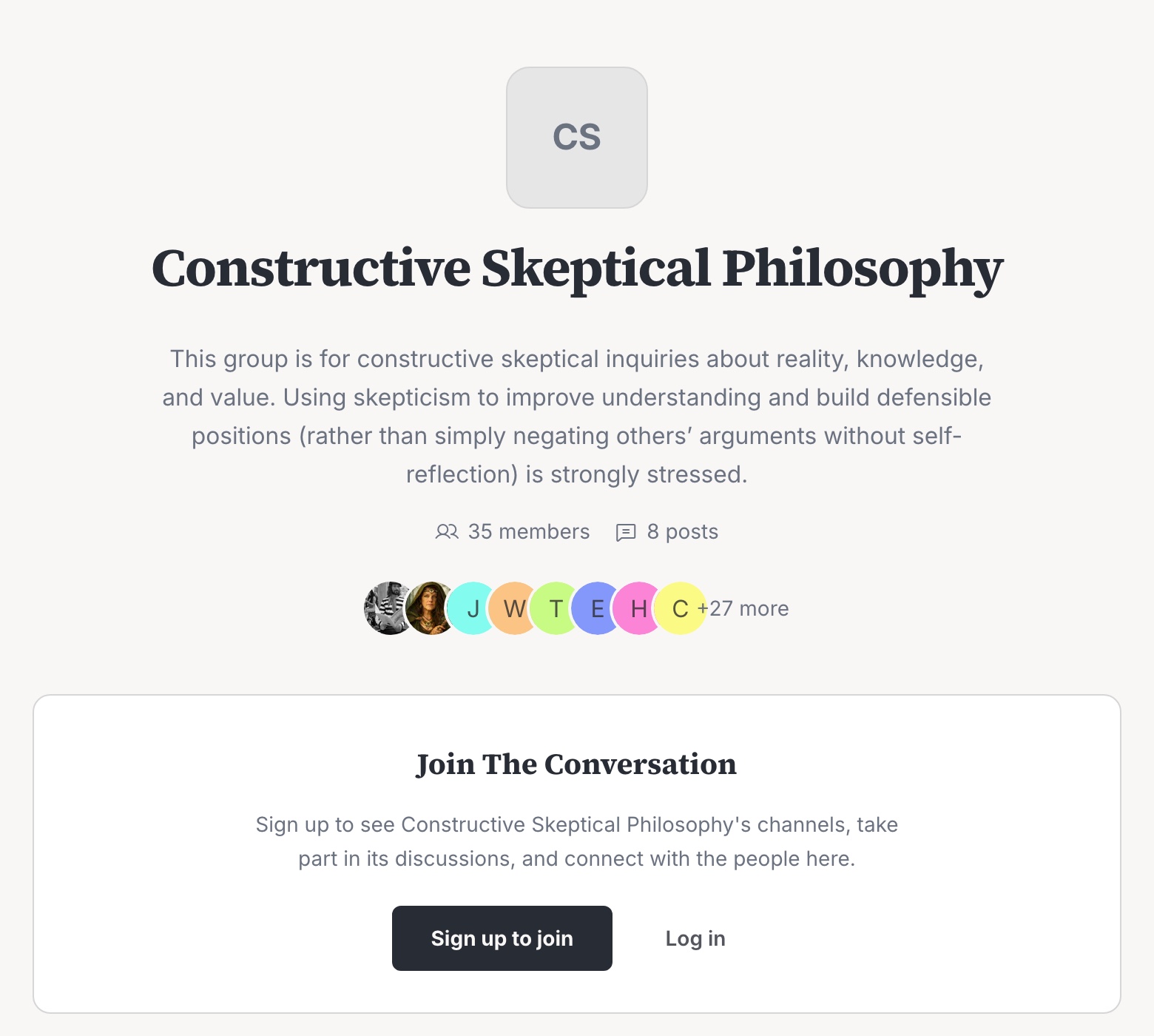
Groups, events, and questions that find people
Groups and channels
Book clubs, neighborhoods, families, and research circles, each with channels for real conversation.
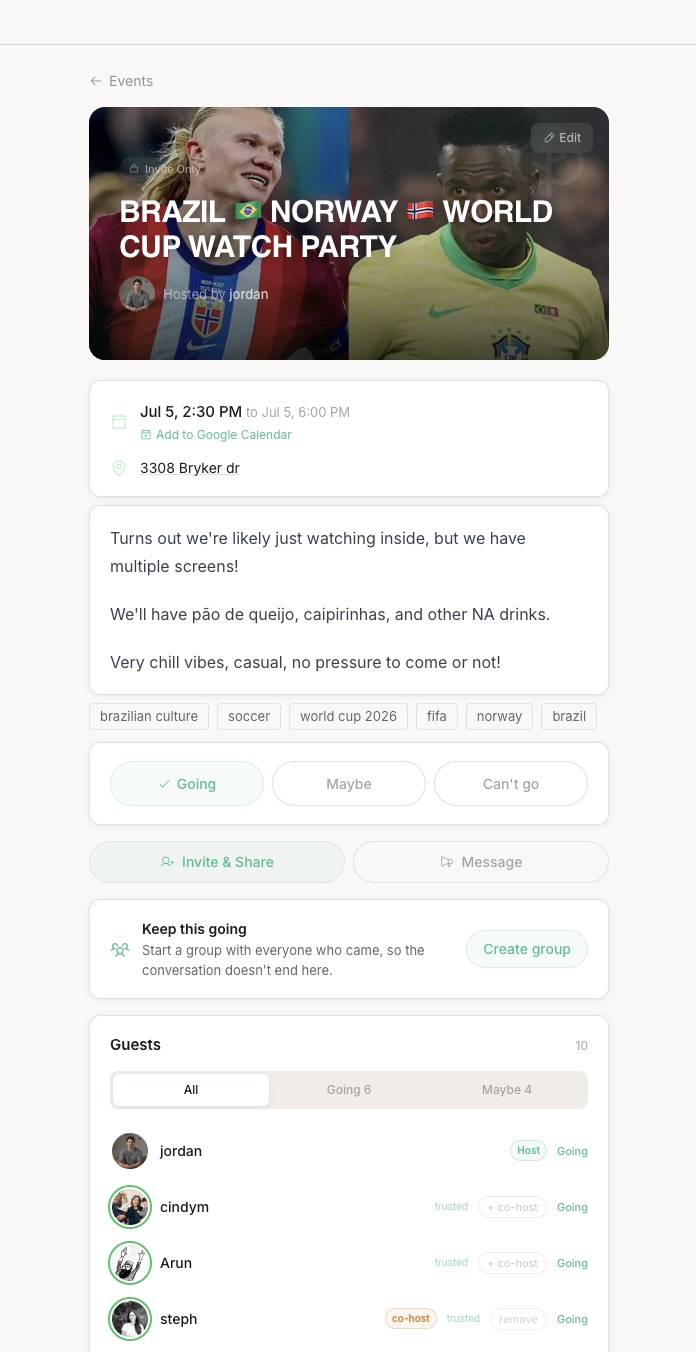
Events
Plan a gathering, let guests in by trust if you want, and start a group with everyone who said yes.
Asks
Post a question and UpTrust sends it to people you trust who know the topic.
Start with your AI
Ask the AI you already use to write your introduction, paste it back, and confirm the people it named. Your questions become asks, and your network has people in it on day one.
Frequently
Asked
Questions
How does uptrusting.com relate to UptrustHQ?
UptrustHQ builds the trust engine. uptrusting.com is the first product on it. The same engine also runs over five public trust graphs, and your AI can ask it who you trust, with your permission.
Whose trust am I seeing?
Yours first. When the app shows how much you might trust someone on a topic, it works that out from your own network, so your neighbor sees a different view. You can also rank posts through a named lens, like a group you belong to or a community found in the voting. Each lens says whose trust it is.
Won't a feed built on who I trust become an echo chamber?
The engine is built to push the other way. It scores bridges, and Open Questions names every side of a contested question. You can see what the other side believes, which is exactly what an echo chamber hides.
Is it available now?
Yes. uptrusting.com is live on the web, iPhone, and Android. Sign up, decide who you trust on what, and your feed starts to reflect it.
Social media that runs on trust
Join on the web, or get the app for iPhone or Android.